Left
Back

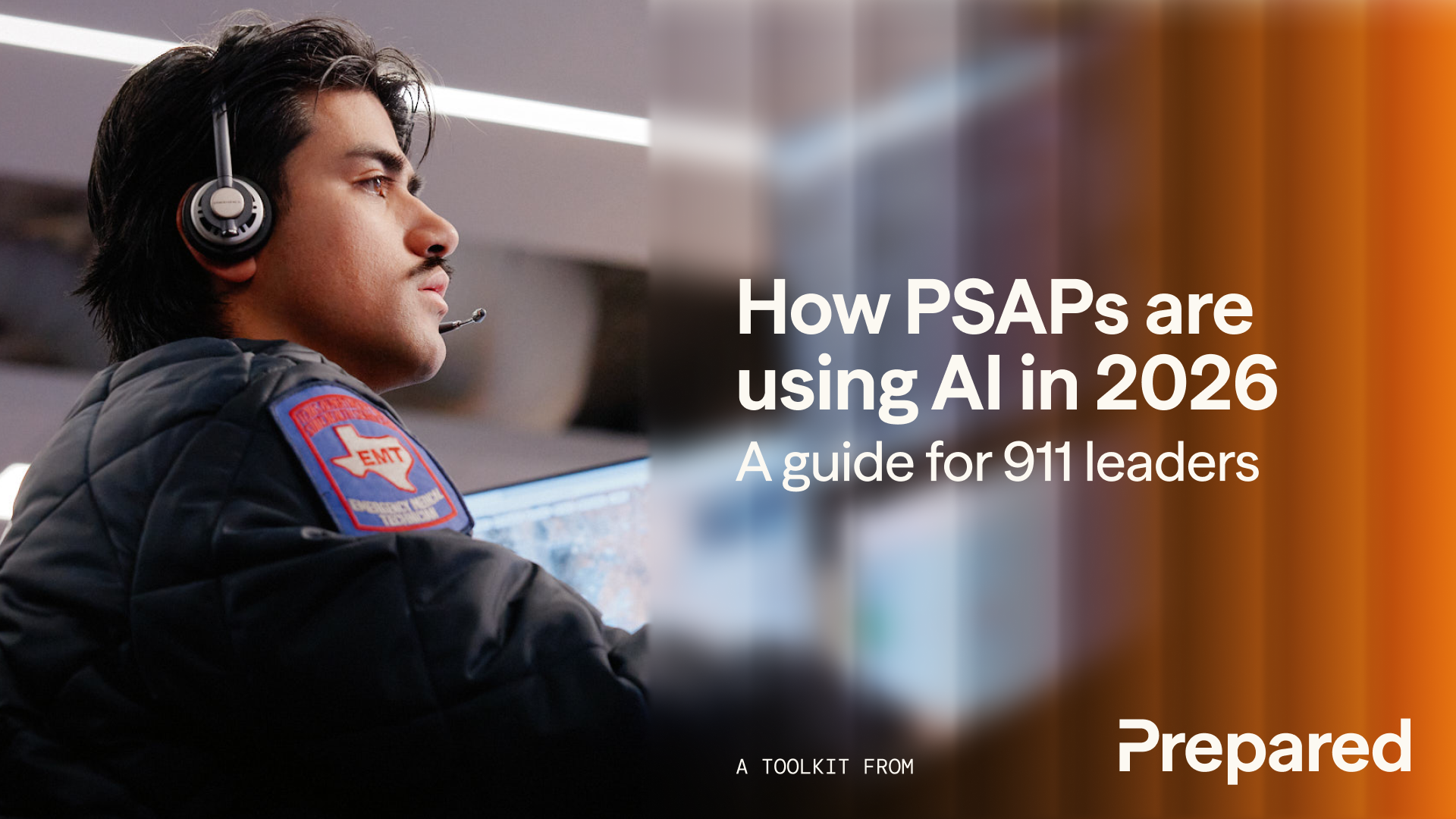
How PSAPs are using AI in 2026

911
Education
How To

For decades, 911 data has been limited by what could be captured in the moment: spoken words, fragmented notes, and context passed between call-takers, dispatchers, and responding units.

In 2026, AI-powered 911 platforms are transforming emergency communications into structured, real-time intelligence. Modern PSAP technology now captures and organizes live audio, text-to-911, multimedia, radio traffic, and historical incident data into a unified operational view.

Prepared is part of this shift, helping public safety agencies unlock the full value of 911 data by transcribing, translating, contextualizing, and structuring every interaction as it happens.

Instead of relying on partial information or delayed summaries, telecommunicators and field responders gain:

  • Live transcription of 911 calls
  • Automated call summaries and key detail extraction
  • Real-time language translation
  • Multimedia from the scene (photos, video, text)
  • Historical incident context tied to location
  • Intelligent automation that reduces noise and prioritizes urgency

This evolution in AI for PSAPs improves call clarity, supports faster dispatch decisions, strengthens officer safety, and expands quality assurance oversight.

As agencies modernize toward NG911 and real-time interoperability, 911 data is no longer just a record of what happened. It becomes an operational intelligence layer, connecting call-taking, dispatch, patrol, and Real-Time Crime Centers (RTCCs) with shared situational awareness from the first second of an incident.

When unified and activated in real time, AI in 911 enhances response coordination, reduces cognitive load inside the center, and enables better-informed decisions across the public safety ecosystem.

Download this free toolkit to see how PSAPs are using AI in 2026—and how your agency can implement it responsibly and effectively.

For decades, 911 data has been limited by what could be captured in the moment: spoken words, fragmented notes, and context passed between call-takers, dispatchers, and responding units.

In 2026, AI-powered 911 platforms are transforming emergency communications into structured, real-time intelligence. Modern PSAP technology now captures and organizes live audio, text-to-911, multimedia, radio traffic, and historical incident data into a unified operational view.

Prepared is part of this shift, helping public safety agencies unlock the full value of 911 data by transcribing, translating, contextualizing, and structuring every interaction as it happens.

Instead of relying on partial information or delayed summaries, telecommunicators and field responders gain:

  • Live transcription of 911 calls
  • Automated call summaries and key detail extraction
  • Real-time language translation
  • Multimedia from the scene (photos, video, text)
  • Historical incident context tied to location
  • Intelligent automation that reduces noise and prioritizes urgency

This evolution in AI for PSAPs improves call clarity, supports faster dispatch decisions, strengthens officer safety, and expands quality assurance oversight.

As agencies modernize toward NG911 and real-time interoperability, 911 data is no longer just a record of what happened. It becomes an operational intelligence layer, connecting call-taking, dispatch, patrol, and Real-Time Crime Centers (RTCCs) with shared situational awareness from the first second of an incident.

When unified and activated in real time, AI in 911 enhances response coordination, reduces cognitive load inside the center, and enables better-informed decisions across the public safety ecosystem.

Download this free toolkit to see how PSAPs are using AI in 2026—and how your agency can implement it responsibly and effectively.